A day dedicated to develop knowledge
November 9 in connection with EHiN 2026, X Meeting Point
The day before the EHiN conference opens, we welcome you to a dedicated pre-conference—a day for in-depth professional learning, practical knowledge, and collaboration. On Monday, November 9, the venue will be filled with various activities and events you can participate in or help host yourself.
The pre-conference is a flexible gathering place for:
- Professional development, mini-courses, training sessions, and presentations
- Workshops that deep dives into specific topics with space for dialogue
- Meetings and networking arenas for cross-sector collaboration
The goal of the day is to create space for knowledge, relationships, and development—ahead of Norway's largest gathering place for e-health.
Would you like to host your own event at the pre-conference? We offer both open and closed rooms for various purposes, so get in touch or read more further down the page.
EHiN Academy: Leadership
Part 1: AI in health for leaders - Part 2: OpenEHR and digital transformation
Speakers - Silvija Seres, Svava María Atladóttir og Jordi Piera Jiménez
The Leadership Program is designed for leaders who want to understand and navigate the major changes shaping healthcare. The focus is on how technology, data, and new frameworks influence development, and how leaders can address these opportunities and challenges with insight and confidence. The program combines knowledge of trends and change management tools, offering space for reflection and dialogue with peers.
The goal is to strengthen your role as a leader in a period of rapid transition—and inspire you to actively contribute to shaping the future of healthcare.
Part 1 v/Silvija Seres:
AI in Healthcare for Leaders, AI Executive Roundtable 3000 NOK excl.VAT.
Part 2 v/Svava María Atladóttir and Jordi Piera Jiménez:
OpenEHR and digital transformation 3000 NOK excl.VAT.
Or take part in both parts for 4000 NOK excl.VAT.
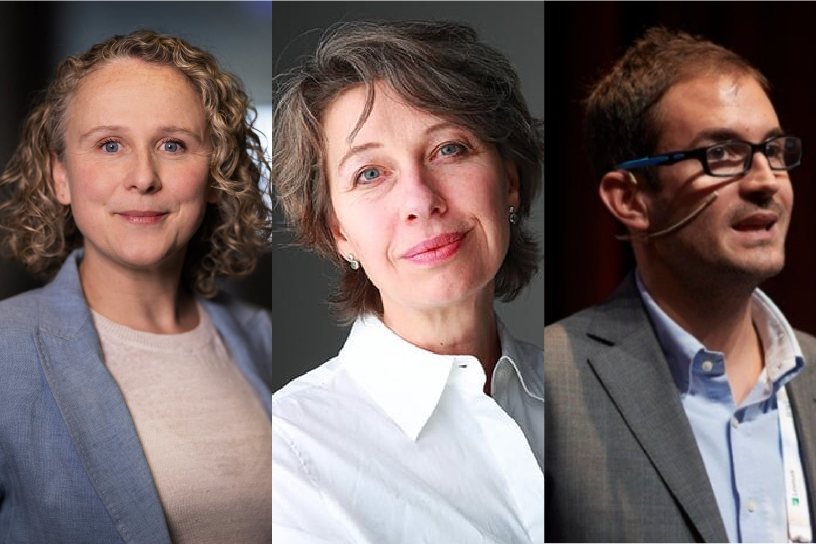
Read more about the program for the leadership track...
The Leadership Track will consist of two parts.
Part 1: AI in Healthcare for Leaders
AI Executive Roundtable – strategic conversation for leaders in the healthcare sector
By Silvija Seres, in collaboration with EHiN
November 9. at X Meeting Point, from 10:00 - 13:00.
Artificial intelligence is currently evolving faster than many organizations can adapt. In several knowledge-intensive sectors, technology is already changing how analyses are performed, how decisions are prepared, and how work is organized.
The healthcare sector is in the middle of this development. At the same time, this is a sector where change naturally happens more cautiously than elsewhere, because quality, safety, and trust must always come first. The result is that many organizations today find themselves in a situation where the potential is clear, but progress is uncertain.
Many have launched pilot projects with artificial intelligence. Fewer have managed to create genuine organizational movement around the technology. The question is therefore not primarily what the technology can do, but how leaders create direction, learning, and momentum within the organization around AI.
The AI Executive Roundtable has been established as a small and confidential forum where leaders in the healthcare sector can discuss precisely this. The goal is to create an arena for reflection, inspiration, and exchange of experience among actors facing the same strategic challenges.
Purpose
This roundtable conversation is based on two key questions:
- What does the pace of AI development mean for the healthcare sector over the coming years?
- How can leaders build organizational momentum around AI in their own organizations?
Through short professional perspectives and structured conversation, participants discuss how artificial intelligence impacts strategy, organization, and the development of healthcare services.
The ambition is to contribute to clearer strategic thinking, a stronger shared language, and a better understanding of what actually needs to be built in organizations wishing to adopt the technology in a responsible and efficient manner.
Key takeaways for participants
Participants gain a clearer strategic picture of how artificial intelligence affects the healthcare sector and which questions leaders must address now.
The roundtable aims to strengthen the understanding of the pace of development, while providing room to discuss how leaders can build momentum and the courage to adopt new opportunities responsibly.
Who should attend
Leaders and decision-makers from the healthcare sector: health trusts, hospitals, health tech companies, public administration, research environments, and health tech investors.
The roundtable gathers up to 12 participants from different organizations to ensure an open and confidential conversation among actors facing similar strategic challenges.
Part 2: The Future of Data Sharing - OpenEHR and digital transformation
Strategic Implementation for Healthcare Leaders
By Jordi Piera Jiménez and Svava María Atladóttir, in collaboration with EHiN
November 9. at X Meeting Point, from 14.00 - 16:00.
In the second part of the academy, the focus shifts from overarching technology and AI to the very foundation of future digitalization: seamless and secure data sharing. The European Health Data Space (EHDS) sets a new framework for how health data flows across borders and systems, while standards like OpenEHR and HL7 FHIR define the technical and structural reality of the Norwegian healthcare sector.
For leaders, this is no longer about purely technical choices, but strategic positioning. How do you ensure your organization is prepared for the new European requirements? How do you balance the need for open, vendor-neutral data models with existing specialized systems and strict privacy regulations?
Purpose
The aim of this session is to give leaders a strategic understanding of the choices they make for their future health care organisation.
60 minutes - OpenEHR
Dr. Jordi Piera-Jiménez will take you through the principal architectural concepts include the lifelong, patient‑centric shared health record, future‑proof data and clinical process support.
Dr. Jordi Piera-Jiménez is a digital health leader with more than 25 years of experience spanning health IT, digital health strategy, interoperability, research and health policy. He is CEO of openEHR International, where he is focused on advancing open, standards-based approaches to health data and strengthening collaboration across the global digital health ecosystem.
Prior to becoming CEO, Dr Piera-Jiménez spent a decade leading digital health strategy in Catalonia, most recently as Director of Digital Health Strategy at the Catalan Health Service, where he played a key role in one of Europe’s most ambitious health system digitalisation programmes.
60 minutes - How to transform healthcare?
Icelands National University Hospital uses HIMSS maturity models. The hospital has used the HIMSS EMRAM (Electronic Medical Record Adoption Model) to gauge its clinical documentation, closed-loop medication, and electronic health record capabilities. It is continuously optimizing its EHR infrastructure to streamline hospital-wide clinical activity. The idea is to create a future proof hospital.
During this hour, Svava María Altadóttir is taking the participants through the experiences from Landspitali, and how that also is translated into a national strategy.
Svava María Altadóttir is Special Advisor to the Permanent Secretary at the Ministry of Health of Iceland, focusing on national transformation initiatives. She previously served as Chief Transformation Officer and Executive Director at Landspítali University Hospital, where she led the development of technological capabilities, fostered a culture of innovation, and drove strategic healthcare transformation.
She is co-founder of Future Medical Systems and co-author of Healthcare by Design (University of Toronto Press, 2025) and Discovery Design (2018). She is based in Reykjavík, Iceland.
EHiN Academy: Structured data
From EHDS to HL7 FHIR and openEHR
Learn how health data can follow the patient across systems, organizations, and national borders. How do we ensure health data retains the exact same meaning when used by another clinician, in a different EHR system, by another organization, or in another country?
Structured health data is a prerequisite for better patient pathways, safer information sharing, reduced duplicate entry, automated reporting, and new opportunities for quality improvement and AI. To succeed, clinical information models, terminologies, EHR systems, and exchange standards must work together.
At EHiN Academy: Structured Data, participants get the complete picture in a single day.
We follow the information from the moment a clinician documents it in the health record, through modeling, structuring, and terminology, to when the data can be shared, understood, and reused. Participants will learn how openEHR, SNOMED CT, and HL7 FHIR contribute, what needs these different building blocks address, and how they complement one another.
Read more about the program...
This program is part of the EHiN pre-conference and takes place at X Meeting Point on November 9, from 10:00 to 16:00.
We follow the journey of health data from the moment a clinician documents it in the electronic health record (EHR), through modeling, structuring, and terminology, to when it can be shared, understood, and reused. Participants will learn how openEHR, SNOMED CT, and HL7 FHIR contribute, what needs these different building blocks address, and how they complement one another.
Through pedagogical introductions and concrete examples from the Norwegian healthcare system, we demonstrate how structured data is applied in practice. Participants will explore experiences from:
- Structured EHR for cancer
- Clinical information models, openEHR, and the work of NRUA (National Editorial Board for Archetypes)
- Using SNOMED CT to ensure shared clinical meaning
- Helseplattformen’s pilot for sharing structured data through MyHealth@EU
- Collaboration and interplay between openEHR and HL7 FHIR
- Automated data capture from EHRs to quality registries
- Norwegian implementation of the EHDS (European Health Data Space)
- Explain why standardized, structured health data is necessary
- Distinguish between clinical information models, terminology, and exchange standards
- Explain the primary roles of openEHR, SNOMED CT, and HL7 FHIR
- Understand how these standards possess distinct strengths and complement one another
- Describe what EHDS entails at a high level
- Understand how structured documentation enables data sharing, automated data capture, and reuse
- See how standards organizations, healthcare bodies, and vendors must collaborate on models, terminology, information exchange, and governance
The Academy is relevant for:
- Leaders and decision-makers
- Clinicians and other healthcare professionals
- IT personnel and enterprise architects
- Information governance leads and standardization specialists
- Staff in municipalities, regional health trusts, and public administration
- Vendors, startups, and innovation hubs
- Anyone seeking to understand what structured health data means in practice
10:00–10:10 | Welcome to EHiN Academy
Speaker: Nard Schreurs, EHiN
Format: Plenary introduction
Nard opens the day with a brief introduction to EHiN, the Academy format, the day's core objectives, and track organization.
10:10–10:20 | Structured Health Data: Why Now?
Speaker: Tine Hunt, Helse Vest IKT
Format: Thematic introduction
- This session sets the stage by addressing:
- The core challenges structured health data aims to solve
- The need for seamless care pathways across organizations and systems
- Patient safety, resource scarcity, and the imperative for reuse
- Structured information as the foundation for collaboration, quality improvement, reporting, and AI
- The educational progression planned for the day
Key takeaway: Norway does not necessarily need a single, unified EHR system. Norway needs standardized health data and digital infrastructure that allows disparate systems to understand and exchange information.
10:20–10:35 | Structured EHR for Cancer: From Clinical Need to Reusable Data
Speaker: Siri Skram, Breast and Endocrine Surgeon at Oslo University Hospital and Clinical Coordinator for Structured EHR for Cancer in South-Eastern Norway Regional Health Authority (Helse Sør-Øst)
Format: Concise, practice-focused clinical case
The presentation highlights:
- Why oncology requires structured and reusable data
- Standardizing documentation within established care pathways
- Treatment and information requirements across hospitals and healthcare entities
- Challenges surrounding resource usage and duplicate documentation
- Clinical and administrative needs for reuse
- Key insights from the Structured EHR for Cancer initiative
- Why shared models and concepts are indispensable
Structured EHR for Cancer serves as a recurring clinical case study, illustrating the problem these building blocks aim to solve before subsequent sessions explain how.
11:10–11:30 | SNOMED CT: Ensuring Health Data Means the Same Thing
Speaker: Trine Angelskår, Norwegian Directorate of Health
Format: Focused instructional presentation
Topics covered:
- Distinctions between information models, terminologies, code sets, and classifications
- Why structure alone cannot guarantee shared meaning
- What SNOMED CT is and the specific role it fills
- How terminology binds to clinical information models
- How SNOMED CT supports documentation, exchange, and reuse
- Ensuring clinical concepts are interpreted identically across systems and use cases
The primary takeaway centers on the difference between how information is structured and what that information actually means.
11:30–11:35 | Short Transition
Participants attending the digital competence and service development track depart for lunch, while participants in the structured data track remain.
11:35–12:00 | From Structured Documentation to Cross-Border Sharing
Speakers: Mona Stedenfeldt and Eigil Gotås, Helseplattformen
Format: Practical case study and expert dialogue
Drawing from a pilot project transferring structured data to the National Contact Point for MyHealth@EU, this session illustrates how clinical documentation, information models, terminology, information governance, and system architecture must align.
Topics covered:
- Which clinical data points are shared
- How information is captured and structured
- How terminologies and code sets are applied
- What elements must be explicit for data to be understood outside its native EHR
- Preparing data for transmission to the national contact point
- Applicable standards, interfaces, and architectural components
- Preserving clinical meaning across the data pipeline
- Practical lessons and obstacles encountered during the pilot
- Implications for EHDS and future cross-border data exchange
- Requirements for sustainable, long-term information governance
Key takeaway: Structured data only delivers cross-organizational value when clinical content, terminology, architecture, exchange standards, and governance operate in synergy.
From European Requirements to Exchange and Reuse
13:00–13:30 | EHDS: From European Regulation to Norwegian Implementation
Speaker: Hans Løwe Larsen, Department Director, Division of Information Management and Methods, Norwegian Directorate of Health
Format: Presentation with brief audience Q&A
This session places the morning's building blocks and case studies into a broader European and national context:
- What the EHDS entails and the core challenges it addresses
- Primary versus secondary use under EHDS, and why the distinction matters
- Practical impacts of EHDS on citizens, healthcare professionals, and organizations
- Forthcoming mandates regarding information, software systems, and data exchange
- Why standardized, interpretable data is mandatory
- What Norwegian healthcare entities should monitor and prepare for
- Connections between EHDS, national infrastructure, and MyHealth@EU
- Essential organizational, professional, and technical prerequisites
- How existing Norwegian initiatives in structuring, terminology, and data exchange fit into future rollout
The session provides a high-level, practical operational briefing rather than a granular legal review.
13:30–14:05 | HL7 FHIR: From Structured Data to Exchange
Speaker: Line Andreassen Sæle, Norwegian Institute of Public Health (NIPH)
Format: Educational presentation
Topics covered:
- What HL7 FHIR is
- The specific problem the standard was built to solve
- The anatomy of a FHIR resource
- Profiles and implementation guides explained
- The distinction between modeling, coding, and exchanging information
- What technical and clinical agreements are required for disparate systems to interpret data identically
- A concrete example of clinical information exchange
Attendees will see that FHIR primarily enables exchange, that shared wire formats alone do not guarantee shared clinical meaning, and that information models, terminologies, and exchange specifications must function as a unit.
14:05–14:40 | openEHR and HL7 FHIR: Different Strengths, Shared Goals
Speakers: Line Andreassen Sæle, Jordi Piera Jiménez, and a representative from openEHR
Format: Joint instructional session
This session explores why openEHR and HL7 FHIR are complementary rather than competing standards. Each has distinct architectural focuses; together, they ensure clinical information can be modeled, retain its meaning, and be shared seamlessly.
Topics covered:
- Distinct design goals behind openEHR and HL7 FHIR
- Complementary strengths and primary domains of each standard
- Why they should not be framed as mutually exclusive alternatives
- Points of intersection and integration
- How clinical data flows from an openEHR model to a FHIR interface
- Preserving semantic integrity when transforming, exposing, or exchanging records
- The role of terminologies such as SNOMED CT within this interaction
- Practical guidelines for mapping and data transformations
- A walkthrough of an end-to-end data pipeline demonstrating both standards in action
- Active collaboration between the openEHR and HL7 communities
- Practical implications for software implementers, health authorities, national programs, and EHDS
Key takeaway: openEHR and HL7 FHIR possess distinct strengths but share an identical goal: ensuring clinical data can be structured, understood, exchanged, and utilized across borders and boundaries.
14:40–15:00 | From Standards to Synergy: What Does It Take in Practice?
Moderator: Nard Schreurs, EHiN
Panelists: Representatives from openEHR, SNOMED CT, and HL7 FHIR, joined by Jordi Piera Jiménez
Format: Structured expert panel
- A discussion shifting focus from theoretical architectural alignment to real-world, sustainable implementation:
- Prerequisites for standards working harmoniously in production environments
- What must be maintained and governed centrally at the national level
- What individual providers and software vendors must build and manage locally
- Clear allocation of ownership across models, terminologies, profiles, and implementation guides
- Guaranteeing clinical meaning through the entire data lifecycle
- Common misunderstandings that obstruct productive inter-standard collaboration
- What global standards-body collaboration means for Norwegian actors
- Avoiding duplicated efforts and competing artifact variants across independent projects
- Strategic implementation priorities for Norway
15:15–15:30 | From EHR to Quality Registry: Automated Data Capture in Practice
Speaker: Liv Marit Rønning Dørum, Cancer Registry of Norway (Norwegian Institute of Public Health)
Format: Focused practical case study
Topics covered:
- Eliminating the overhead and errors of manual, duplicate documentation
- Flowing clinical data directly from EHRs into specialized quality registries
- Requirements automated capture imposes on structure, standardization, and source data quality
- Real-world takeaways from pulling data out of DIPS Arena and Helseplattformen
- Determining what can be reliably automated versus what requires manual clinical validation
- Quantifiable gains for clinicians, registry managers, and healthcare organizations
The presentation traces a complete pipeline:
EHR Documentation → Structure & Terminology → Transmission → Ingestion & QA → Quality Registry Utilization
15:30–15:55 | Does Norway Have What It Takes for EHDS?
Moderator: Nard Schreurs, EHiN
Format: Moderated panel discussion with audience Q&A
This panel unites perspectives across:
- EHDS policy and national rollout
- Clinical information modeling and openEHR
- HL7 FHIR and interoperability
- Terminology and shared semantic meaning
- Automated data extraction and practical reuse
- Clinical workflows and operational adoption
- Key discussion questions:
- Which foundational building blocks does Norway already possess?
- Where do the most significant gaps remain?
- Is the greatest bottleneck technology, organizational structure, governance, or digital literacy?
- What must Norwegian organizations prioritize first?
- How do we safeguard national reuse and curb unnecessary local customization?
- What lessons can be applied directly from initiatives like Structured EHR for Cancer and the MyHealth@EU pilot?
15:55–16:00 | Summary and Wrap-Up
Session Lead: Tine Hunt, Helse Vest IKT
A closing synthesis consolidating the day's insights through five key questions:
- Why do we need structured health data?
- How is clinical information represented?
- How do we safeguard shared understanding?
- How is information moved across software systems and borders?
- How do we repurpose data downstream?
EHiN Academy:
Digital competence and service development
Understanding how the healthcare system operates at an overarching level—and where technology fits in—is essential for the sector. We provide a solid introduction to the intersection of health and technology. Whether you are new to the sector, work in healthcare, or deliver technological solutions, you will gain a holistic understanding of digital healthcare in Norway, key concepts, architecture, and current frameworks. We take a closer look at how technology shapes the future of patient care, equipping you with the tools and insight needed to navigate future digitalization projects with confidence.
Price: 1500 NOK excl.VAT.
Read more about the program...
This program is part of the EHiN pre-conference and takes place at X Meeting Point on November 9th, from 10.00 to 16.00.
The track "Digital Competence and Service Development" provides an understanding of how the healthcare system functions at high-level, regional, and local levels, and where technology contributes to quality, patient safety, sustainability, and user-friendliness for healthcare professionals and citizens.
We offer a thorough introduction to the intersection of healthcare and technology. Whether you are new to the sector, work in healthcare, or provide technology solutions, you will gain a comprehensive understanding of digital healthcare in Norway, key concepts, architecture, and current frameworks. We take a closer look at how technology is shaping the future of patient care, equipping you with the tools and insights needed to navigate digitalisation projects with greater confidence.
We have invited prominent speakers who, through presentations and engaging discussions, will provide valuable insights and practical expertise for your ongoing work across the health and care sector.
10.00 - 11.30: Data-Driven Development, Integrated Information Exchange, and Digital Infrastructure
Norway does not need a single electronic health record (EHR) system. Norway needs standardized health data and a digital infrastructure that allows diverse systems to exchange information and ensure seamless patient pathways both across national distances and European borders.
- 10.00: Welcome and agenda for the day
- What is EHiN, why are we here and what is EHiN Academy
- Structured data - why now?
- 10.35: Structured EHR for Cancer
- 10.50: The Building Blocks - intro
- 11.30: Lunch
12.30 - 13.30: Developing and Implementing Digital Technology in Clinical Practice and Workflows
This session offers insight into the development and implementation of technologies that support new service models and deliver clinical value in health and care services. What are the key drivers and potential barriers to effective digital transformation in service delivery? You will gain insight into areas such as remote patient monitoring (digital home follow-up), practical applications of AI, and the impact of procuring new clinical systems and EHRs.
- Speaker: Ingegerd Kleivdal, Head of Innovation and Service Development, Health and mastery, Nordre Follo Municipality
- Speaker: Kristine Skjøthaug, Head of E-Health, Stavanger Municipality
- Speaker: Medbric, a trusted AI colleague for healthcare, research-grounded AI agents (Confirmed; speaker TBD)
13.45 - 14.30: A Systems Perspective on E-Health in the Health and Care Sector
This session provides a deeper understanding of the system landscape, including diverse stakeholders, responsibilities, and decision-making levels. A core learning objective of digital competence is acquiring system knowledge: knowing who makes decisions and who delivers tech-enabled services. We will take a journey through Helsenorge, national digital collaboration platforms, digital front-line services, and municipal digitalization networks. Presentations will cover the system landscape, division of roles and responsibilities in healthcare, data privacy, digital ethics, the vendor and service market, information security, and more, with an emphasis on dialogue between speakers and participants.
- Speaker: Jon-Torgeir Lunke, MD MHA, Senior Advisor, Department of Digital Strategy, The Norwegian Directorate of Health
- Speaker: Kristin Brekke, Head of E-Health, Bergen Municipality
- Speaker: Hege Rob Moi, Head of ICT at E-Health, Research and Development Department, Haukeland University Hospital
14:45 - 16:00: Healthcare Complexity – Digital Collaboration and Architecture
A strong synergy between technology and healthcare is essential. Digital competence and a clear understanding of what a digital change process demands—both technologically and organizationally—are critical for successful digital transformation. What strategic and leadership approaches are required to handle this complexity operationally, tactically, and strategically?
This session features insights and shared experiences from municipalities and hospital trusts on how they have successfully transformed service delivery—and the pitfalls they recognized and avoided.
- Speakers: Ingrid Marie Iversen and Kari Helene Støfringsdal, Helse Bergen Hospital Trust, Department of Collaboration / E-Health
- Speaker: Linda Byström, Enterprise Architect, Nordre Follo Municipality
- Panel Discussion & Q&A: Open discussion with the audience and speakers, including Hege Rob Moi and Jon-Torgeir Lunke
Municipality day
KS invites you to the Municipal Day at EHiN, a gathering place for municipalities, government authorities, and national actors focusing on solutions to some of the most critical challenges in the health and care sector. We lift our gaze to examine both short-term and long-term measures to strengthen the sustainability of these services.
Throughout the day, you will gain insight into current national initiatives, practical experiences from municipalities, and perspectives from state actors. Together, we explore how technology, innovation, and collaboration can help address tomorrow's challenges.
The event is reserved for employees in the municipal sector and is free of charge, but registration is required.
Price: Free
Read more...
How do we ensure sustainable health and care services in the future?
The Norwegian Government's proposed Health Personnel Plan 2040 points to growing challenges with workforce shortages in health and care services, while the demand for services continues to grow. How can we address this trend in a way that ensures high-quality services for citizens while using resources more smartly?
Digitalization and new ways of working are an important part of the answer. However, the future of e-health is not primarily about how many digital solutions are deployed. It is about what value they create, what benefits they provide for citizens and employees, and how they can contribute to better quality, patient safety, and more efficient resource utilization.
KS invites you to the Municipal Day at EHiN, a gathering place for municipalities, government authorities, and national actors focusing on solutions to some of the most critical challenges in the health and care sector. We lift our gaze to examine both short-term and long-term measures to strengthen the sustainability of these services.
Throughout the day, you will gain insight into current national initiatives, practical experiences from municipalities, and perspectives from state actors. Together, we explore how technology, innovation, and collaboration can help address tomorrow's challenges.
Welcome to a day of professional growth, reflection, and engaging discussions on how we together can build a more sustainable health and care service.
Detailed program to follow.
Target Audience
- Municipal directors and managers within health and digitalization
- Advisors in digitalization and e-health
Registration and Attendance
Date: November 9, 2026
Time: 11.00 – 16.00
Participation: Attendance at the Municipal Day at EHiN is free of charge, but registration is required.
Note: The event is reserved for employees in the municipal sector.
Program
Welcome and Opening
With Ellen Rønning-Arnesen, State Secretary, Ministry of Health and Care Services
Kristin Weidemann Wieland, Area Director FID, KS
Terje Wistner, Department Director of eHealth, KS
Launch of the Self-Declaration Solution
Presented by KS, the Norwegian Directorate of Health, and KS Digital
Deep Dive into Selected Areas of the National Municipal Portfolio
- Digital Collaboration – Gain insight into how digital collaboration can become an integral part of service development, featuring practical experiences and actionable advice on adopting solutions to deliver value for citizens and healthcare personnel.
- Artificial Intelligence (AI) – Learn from practical AI experiences and discover how leadership, collaboration, and various forms of support can meet municipal needs, fostering safe AI adoption and tangible service improvements.
- Citizen Services – A digital frontline in the health and care sector: from information and self-help to assessment, treatment, and follow-up.
Support from National Authorities to Municipalities
With Lucie Aunan, Division Director of Digital Transformation, Norwegian Directorate of Health
Odd Martin Solem, Division Director of Healthcare Personnel, Norwegian Health Network (Norsk helsenett)
Municipal Needs
With Liv Blom-Stokstad, Director of Ageing and Coping, Bærum Municipality
Arne Myrland, Department Director of Health and Care Services, Bodø Municipality
Svein Lyngroth, Municipal Director of Health, City of Oslo
Panel Discussion
With representatives from the Norwegian Directorate of Health, the Norwegian Health Network, and the municipalities
Closing Remarks
Norwegian FHIR Hackathon 2026
(This is a part of the pre-conference, but held physically at Rebel in downtown Oslo)
Explore and co-create the future of interoperability solutions with HL7 FHIR. Join a free, inspiring hackathon as part of EHiN's pre-conference. The hackathon takes place at Rebel Oslo on November 9, 2026. The hackathon requires in-person participation; there will be no option to attend digitally. We have a limited number of spots for the hackathon, so act fast and reserve your place today!
Price: Free
Read more...
More information on FHIR Hackathonet here.
Practical information
You can find all practical information here:
Is the EHiN conference and pre-conference the same ting?
No, the pre-conference is not the same as the main EHiN conference. The pre-conference is held the day before the EHiN conference and features events hosted by several external organizations alongside EHiN itself. The day offers extensive professional development, both standalone and as a supplement to the main EHiN conference.